
Here's what nobody tells you about pleasure after 50
After 50, your clitoral tissue changes. It thins. The sensitivity map shifts. Arousal takes longer to build. And honestly? Most conversations about midlife sexuality stop there, leaving you to either pretend nothing's different or assume your best years are behind you. Neither is true.
I've spent years working with couples navigating this transition, and what I see consistently is that people adapt brilliantly once they understand what's actually happening. Lemon clitoral vibrators are particularly useful during this phase because their suction mechanism works differently on thinner tissue than traditional vibration alone. The sensation changes, but it doesn't disappear. It evolves.
What estrogen withdrawal actually does to sensation
Estrogen doesn't just regulate your cycle. It maintains tissue thickness, moisture, and nerve sensitivity in your vulva. After menopause or during perimenopause, estrogen drops. The clitoral tissue thins by about 25 to 30 percent in some people. The nerve endings remain, but they're less densely packed in thinner tissue, which means direct stimulation can feel too intense or, conversely, require more pressure to register.
That's the physiological shift. Here's what people actually report: sensation feels flatter at first. Or sharper in a way that's less comfortable. Or like the same vibrator suddenly needs different rhythm and timing to produce an orgasm.
Wait, there's more. Perimenopause starts in your 40s for many people. Full menopause (12 months without a period) lands around 51 on average. But the sensation changes don't happen all at once. They're gradual, which means you might spend a year or two adjusting settings on your lemon vibrator, thinking something's broken, when actually you're just in transition.
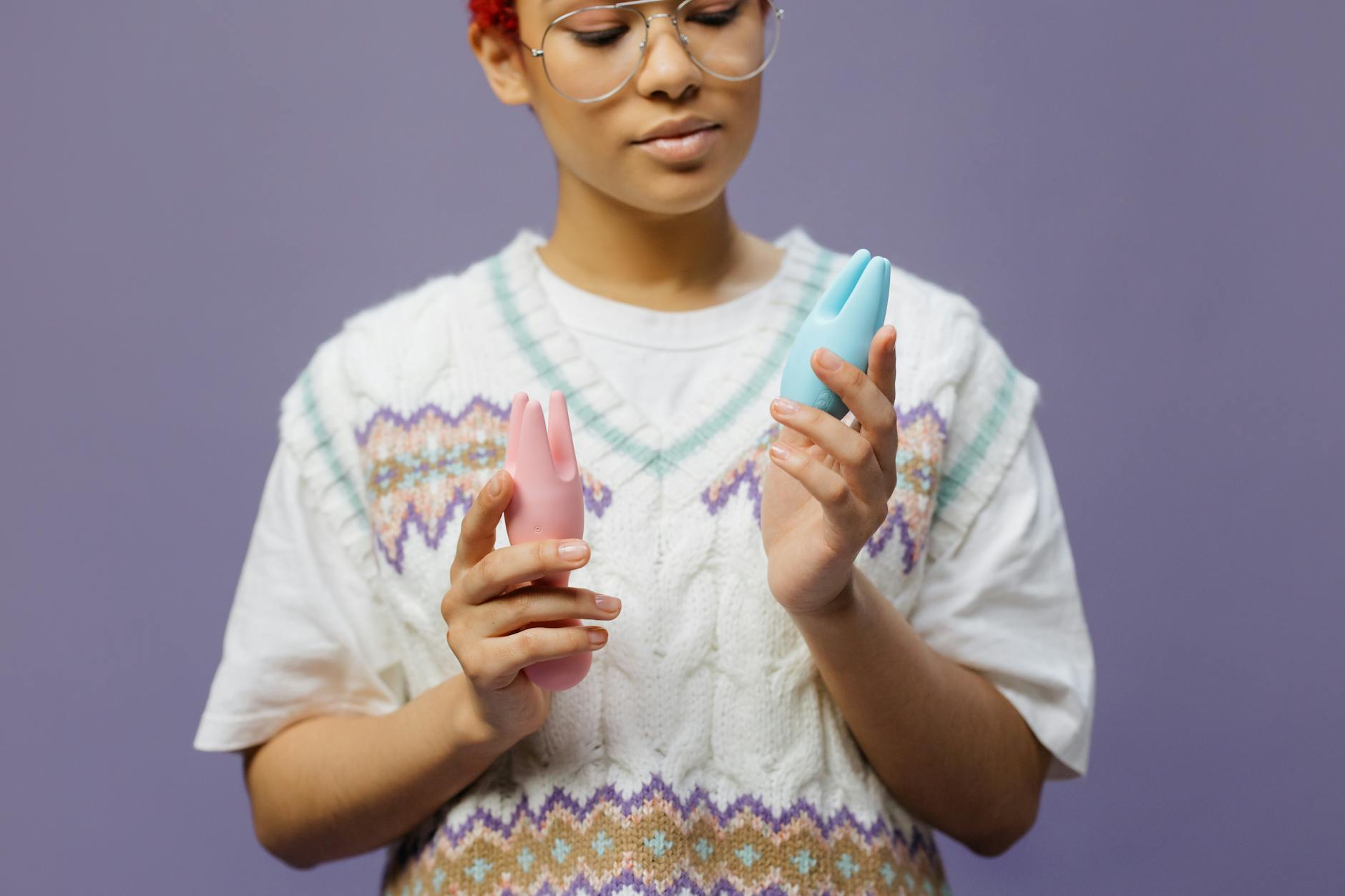
Photo by cottonbro studio on Pexels
Why the lem vibrator behaves differently on your body now
The Lem uses air suction instead of direct vibration. This matters more than you might think, especially as tissue changes. Direct vibration on thinned tissue can feel sharp or create micro-abrasions if you're not producing enough natural lubrication. Suction, on the other hand, creates a seal and stimulates a wider area of nerve endings at once, which means less pinpoint pressure and more distributed sensation.
Here's the practical shift: the Lem's lower settings (1 through 3) that might have felt too gentle in your 40s often feel stronger now. Not because the device changed, but because thinner tissue responds to suction differently. You're not getting less sensation. You're getting more efficient sensation.
Many people also report that after 50, they need more warm-up time before the Lem feels good. That's not a flaw. That's arousal taking longer to build, which is normal and expected. If you were getting to full arousal in 5 minutes at 45, budget 15 to 25 minutes now. This is where having a partner who understands the shift helps enormously, or where extended solo exploration becomes genuinely pleasurable instead of goal-focused.
The arousal timeline actually gets longer (and sometimes better)
In your 20s and 30s, arousal might spike fast. By 50, the rise is gentler and takes more time. This sounds like a loss, but clinical observation suggests something different: when you stop chasing the old timeline and actually work with the new one, orgasms often become longer and more intense.
Why? Two reasons. First, you've had decades to learn your body. You know what works. You're less likely to be performing for someone else or rushing through the experience. Second, longer arousal means more blood flow to the clitoral tissue over time, which means a more sustained contraction during orgasm.
The lem vibrator is particularly well suited to this longer timeline because its gentle suction doesn't fatigue the tissue the way intense vibration can. You can use it for 20, 30, or 40 minutes without discomfort, which allows arousal to build naturally and peaks to become deeper.
Lubrication changes (and what to do about it)
Estrogen keeps vaginal tissue lubricated. When estrogen drops, natural lubrication decreases. This is genitourinary syndrome of menopause (GSM), and it's very common. The solution is straightforward: add external lubrication.
Water-based lubricant is your baseline. It won't damage silicone toys, it's easy to clean, and it mimics the body's own fluid pretty closely. Apply it directly to the Lem and to your vulva before you start. Many people find that once they're 10 to 15 minutes into arousal, the body starts producing more natural lubrication too, so you might not need to reapply.
If water-based lube isn't enough, consider vaginal estrogen cream. A small amount applied 2 to 3 times a week changes the entire sensation landscape. It's not systemic (the dose is tiny), and it addresses the root cause. Talk to your doctor about whether it's right for you.
Pelvic floor support shifts too
Your pelvic floor holds everything in place. Estrogen keeps the muscles and connective tissue firm. When estrogen drops, that support loosens slightly. You might notice that the angle or position that worked perfectly before doesn't anymore, or that you need to engage your pelvic floor differently during orgasm.
This is where pelvic floor physical therapy becomes genuinely valuable, not as punishment but as education. A pelvic floor PT can show you how your muscles are responding now and help you relearn how to work with them. Many people also find that gentle stretching and breathing work before using the Lem relaxes tension and makes the experience better.
The point: if sensation feels weird, it might not be the device. It might be a shift in how your pelvic floor is engaging. Once you know that, you can adjust.
The mental shift is bigger than the physical one
After 50, many people report that pleasure actually deepens because cultural pressure lifts. You're less likely to worry about how you look during sex. You're more likely to prioritize your own sensation over your partner's response. You've stopped performing.
This mental freedom is where the Lem or any clitoral vibrator becomes less of a tool and more of a conversation with your own body. You're not chasing the orgasm you used to have at 35. You're discovering what feels good now. That's a fundamentally different (and often more satisfying) experience.
Practical adjustments that work
Three concrete moves I recommend to almost every person over 50 using a lemon clitoral vibrator:
First, start at pattern or intensity 1 or 2, not 3 or 4. Let your body tell you when to go higher. Second, add 10 to 15 minutes of foreplay before the Lem comes out. That might be partnered touch, solo exploration, or just lying with your thoughts. The goal is arousal building, not rushing. Third, use water-based lubricant every single time, regardless of how much natural lubrication you're producing. It's not a sign of insufficiency. It's a tool.
Oh, and fourth: if you've been using the same lemon vibrator for five years, the seal might have loosened slightly with use. If suction feels less intense, it might be time for a fresh device rather than a reflection on your body.
When to seek support
If pain appears during use or orgasm, that's not normal and deserves attention. Genitourinary syndrome of menopause is real but treatable with topical estrogen or vaginal moisturizers. If arousal has completely flatlined and libido hasn't returned after three months, talk to your doctor about hormone levels. If you're on medications that dull sensation, a prescriber conversation might open options you didn't know existed.
Most importantly: pleasure after 50 is not diminished pleasure. It's different pleasure. Your body hasn't betrayed you. It's just asking you to slow down, pay attention, and recalibrate. The lemon vibrators from Hello Nancy Avo Shop are designed to work with those shifts, not against them.
People also ask
Why do lemon vibrators feel less intense after menopause?
Thinner clitoral tissue after menopause has less density of nerve endings, so the same suction stimulation distributes across a wider area. This feels gentler at first, which can seem like reduced intensity. But it's actually a shift in how sensation distributes, not a loss of capacity. Lower settings on the Lem often feel as strong or stronger than higher settings did before menopause because your tissue is more responsive to gentle, sustained suction.
Can you still have intense orgasms after 50 with a lemon clitoral vibrator?
Yes, absolutely. In fact, many people report their most intense orgasms come after 50, particularly once they adapt to longer arousal time and work with their body's new response pattern. The orgasm quality often improves because you're less goal-focused and more sensation-focused. Patience and lubrication are the main variables.
How long should arousal take with a lemon vibrator after age 50?
Budget 15 to 25 minutes of combined foreplay and stimulation with the device. This isn't the norm at 35, but it's completely normal at 55. Rushing defeats the purpose. Some people find that extended arousal actually leads to longer, more satisfying orgasms, so the extra time becomes a feature rather than a bug.
Should I use lube with a lemon vibrator after menopause?
Yes, every time. Estrogen drop means less natural lubrication, and water-based lube changes the sensation and comfort entirely. It's not optional and it's not a sign your body isn't working right. It's part of the setup, like charging the device.
Does the Lem work differently on post-menopausal bodies than traditional vibrators?
Yes. The Lem's suction mechanism creates a seal and stimulates a broader area of nerve endings, which works particularly well on thinned tissue. Traditional vibration can feel sharp or create micro-abrasions if natural lubrication is low. Suction is gentler and more distributed, which is why many people over 50 find air-suction devices like the Lem more comfortable and effective than traditional vibrators.
What if I'm still perimenopausal and sensation keeps changing?
This is actually common. Perimenopause spans years, and hormone levels fluctuate, so sensation can shift week to week or month to month. One strategy: keep a simple note of what settings and timing work best, then adjust as needed. You're not broken. Your body is in transition, and that's temporary instability on the way to a new normal.
The bottom line
After 50, pleasure doesn't end. It recalibrates. Your clitoral tissue thins, arousal takes longer, and lubrication requires support. But none of that makes orgasm impossible or diminished. It just makes it different. When you work with your body's new pattern instead of fighting it, you often find that pleasure becomes richer, longer, and more intentional than it was before.
If you're navigating these shifts, reach out. That's what we're here for.
Sources & Further Reading
Duchesne, C. (2019). "Genitourinary Syndrome of Menopause and Vaginal Atrophy: More Than Just Symptoms." Journal of Midlife Health, 10(1), 5-7.
Goldstein, S. W., et al. (2013). "Effect of Vaginal Estrogen on Clitoral Sensitivity in Postmenopausal Women." Menopause, 20(3), 281-286.
Lindau, S. T., et al. (2007). "A Study of Sexuality and Health among Older Adults in the United States." New England Journal of Medicine, 357(8), 762-774.